How to Choose a Single Area Rug That Anchors a Room
Key Takeaways
The most common rug mistake is buying one too small. When in doubt, go larger.
A rug anchors a seating or dining area by pulling the furniture into one composed grouping.
Natural fiber rugs suit mountain homes particularly well and age better than synthetic ones.
Silver Fox Gallery on North Main Street in Hendersonville can help you think through scale and material for rugs that work in WNC homes.
A rug does something no other element in a room does quite so cleanly: it defines the zone. In an open floor plan, it says: the living room is here. In a bedroom, it says: this is where mornings happen. Without a rug, furniture floats. With the right rug, everything settles into place and the room suddenly reads as finished.
Getting the right rug matters, and the decisions that go into it, size, material, pattern, and placement, are simpler than most people make them out to be once you understand the principles.
Size: The Most Important Decision You’ll Make
Get the size right and almost everything else falls into place. Get it wrong and the rug fights the room no matter how beautiful it is.
In a Living Room
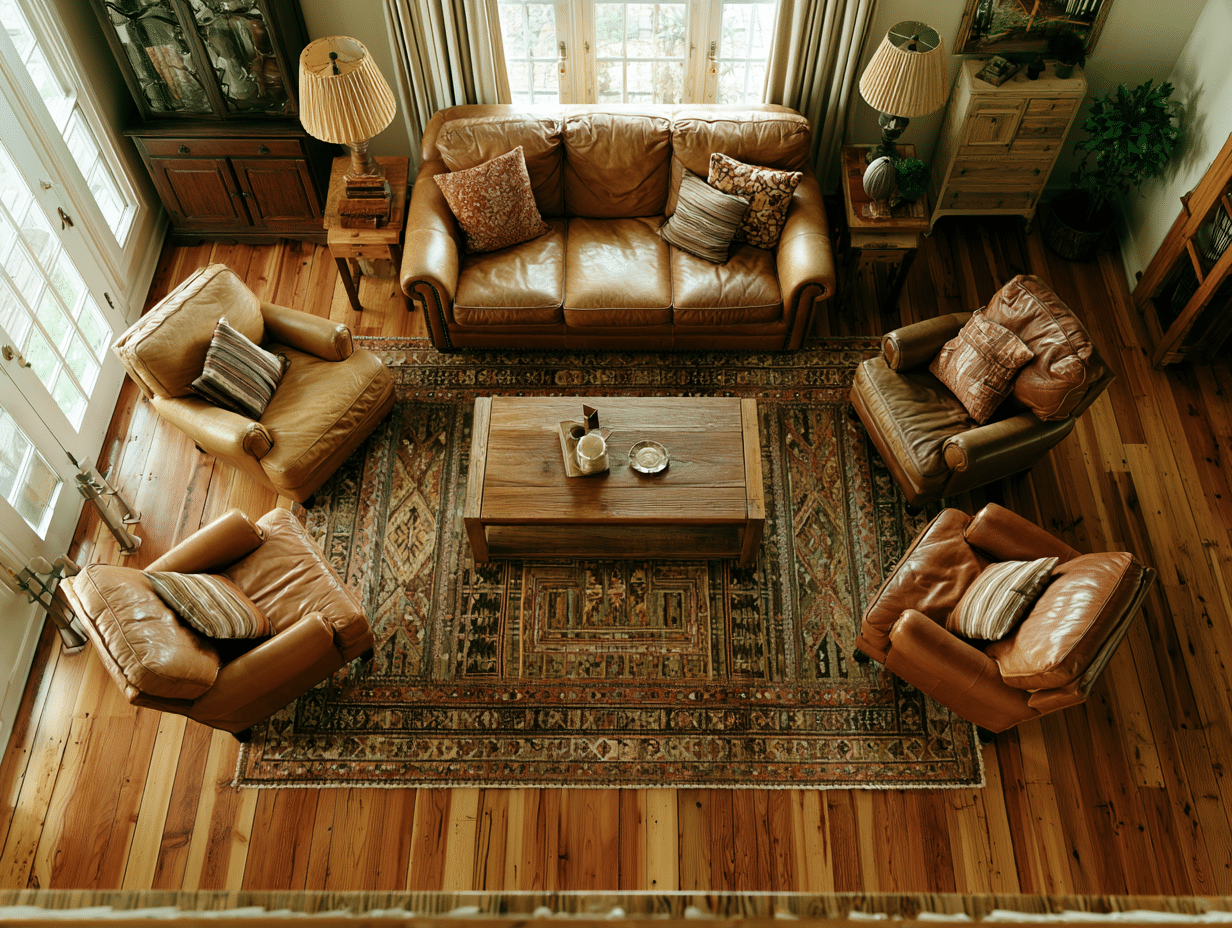
The rug should be large enough to sit under the front legs of every major seating piece in the grouping. The sofa’s front legs on the rug, the armchairs’ front legs on the rug, the coffee table fully on the rug. This creates one composed group, a room within the room, which is exactly what a rug is supposed to do.
If you go with all legs off the rug, the room can still work, but all the pieces must be close enough to the rug’s edge to read as belonging to it. What doesn’t work is having some legs on and some off in a random way, which is the most common rug error in any living room.
As a rough sizing guide for a living room: most spaces need a larger rug than the person shopping first imagines. A rug that looks huge on a showroom floor often looks right once furniture is placed on it at home.
In a Dining Room
The rug should extend at least 24 inches beyond the table on all sides so that chairs remain on the rug when pulled out. Measure your table, add 48 inches to each dimension, and that’s your minimum size. A rug that swallows chairs the moment someone sits down is both impractical and uncomfortable.
In a Bedroom
The rug goes under the lower two-thirds of the bed and extends on both sides by at least 18 to 24 inches, enough to land your feet on something warm when you step out in the morning. A rug that just peeks out from under the bed and stops there reads as an afterthought.
The Tape Test
Before you buy a single rug, do this: use painter’s tape on the floor to mark out the dimensions of the rug you’re considering. Then bring in your furniture or look at where it sits. Does the taped area feel right? Too tight? Too sprawling? Five minutes of tape testing will tell you more than any amount of measuring and second-guessing.
Material: What Suits a Mountain Home
The WNC climate and the mountain pace of life favor natural materials. A few worth knowing:
Wool
Wool is the gold standard for area rugs in a home you plan to live in for a long time. It’s durable, cleans well, handles foot traffic, and improves with age. In a mountain home where people track in dirt, leaves, and the general evidence of outdoor life, a well-made wool rug earns its keep every year.
Jute and Sisal
Natural fiber rugs in jute, sisal, and similar materials suit a mountain home’s natural palette beautifully. They bring an organic texture that works particularly well under solid wood furniture and alongside earthy pottery and art. They’re not as soft underfoot as wool, but they hold up well and age gracefully. They’re also some of the better options at a mid-range price point.
What to Avoid
Synthetic rugs are cheaper upfront and often harder to live with over time. They flatten with use, tend to show wear unevenly, and can feel thin underfoot. In a home where you’re investing in handcrafted furniture, a synthetic rug often undercuts everything around it.
Pattern, Texture, and Color
A rug doesn’t need to be patterned to be interesting. A solid-colored or subtly textured rug in the right material often does more work than a heavily patterned one, because it grounds the room without competing with the furniture and art above it.
If you want pattern, go bold enough that it reads clearly. A faint, small-scale pattern gets lost underfoot and looks neither plain nor intentional. A strong geometric, a classic medallion, or an honest stripe reads clearly and gives the room a line to follow.
For color in a mountain home, the same principles that apply to art apply to rugs. Warm, earthy tones deepen the coziness of a room. Cooler tones open a space. A rug that picks up a color already present in the room’s art or textiles will tie the whole floor together without feeling forced.
Rug Pads: Worth Every Penny
A rug pad under every rug is not optional. It keeps the rug from sliding, which is both a comfort and a safety issue. It also protects the floor, gives the rug a softer feel underfoot, and extends the life of the rug by reducing the wear from grinding against the floor. Buy the right size pad for the rug and trim it so it doesn’t show. This is a small investment that affects every day you live with the rug.
Caring for a Natural Fiber Rug in WNC
Mountain homes are lived-in homes. A few simple habits keep a quality rug looking its best:
Vacuum regularly, going with the pile rather than against it.
Rotate the rug every year or two so it wears evenly and fades evenly in any light it receives.
Deal with spills immediately by blotting, not rubbing.
For a deep clean, have a wool rug professionally cleaned rather than attempting to wash it yourself.
A well-cared-for natural fiber rug can last decades and often develops a richness with age that a new rug doesn’t have.
Summary
The most critical rug decision is size, and the most common mistake is going too small. In a living room, front legs of all seating pieces should be on the rug. In a dining room, the rug should extend at least two feet beyond the table on every side. In a bedroom, it should flank the bed generously on both sides. Natural fibers, especially wool, suit mountain homes best and reward care over time. Use the tape test on your own floor before you buy, and always use a rug pad.
Frequently Asked Questions
How do I know what size rug to buy?
Use painter’s tape on the floor to mark the dimensions before you buy. In a living room, the rug should be large enough for the front legs of all seating pieces to rest on it. In a dining room, add at least 24 inches on each side of the table’s dimensions. In a bedroom, it should extend 18 to 24 inches beyond both sides of the bed. When the tape looks right with your furniture, you have your size.
Should the rug match the furniture or contrast with it?
Neither extreme is necessary. The rug should relate to the room’s palette without matching it exactly. Look for a color that reinforces something already in the room, a tone from the furniture, the art, or the textiles, rather than introducing a completely new note.
What’s the best rug material for a family home in WNC?
Wool is the most durable and livable natural fiber for a family home. It handles traffic, cleans well, and improves with age. Jute and sisal are good mid-range natural options with a texture that suits mountain homes. Avoid synthetic rugs if you can, as they tend to flatten with use and undercut the feel of quality furniture around them.
Do I need a rug pad?
Yes. A rug pad keeps the rug from sliding (a comfort and safety matter), protects the floor, and gives the rug a softer feel underfoot. It also extends the rug’s life by reducing the grinding wear against hard floors. Trim the pad so it’s slightly smaller than the rug on all sides so it doesn’t show.
How often should I clean an area rug?
Vacuum regularly, going with the pile. Rotate the rug once a year so it wears evenly. Deal with spills immediately by blotting rather than rubbing. For a thorough cleaning, have a wool rug professionally cleaned rather than washing it yourself at home.



Leave a Reply