

How to Choose the Right Paint Finish for Every Room in Your Home
Key Takeaways
- Paint finish affects how a color reads, how a surface holds up to daily use, and how light moves through a room. Choosing the wrong finish for a given room or surface is one of the most common paint mistakes homeowners make.
- According to Sherwin-Williams, finish selection errors are cited in 38% of paint-related customer service inquiries, second only to color selection regrets as the most frequent painting complaint (Sherwin-Williams, 2023).
- Flat finishes absorb light and hide imperfections. High-sheen finishes reflect light and amplify them. The right answer for any surface depends on what that surface needs to do in daily life.
- Silver Fox Gallery’s color consultation service in Hendersonville addresses finish selection alongside color choice, because a beautiful color in the wrong finish reads differently than the same color would in the right one.
Most homeowners choose a paint color and then reach for whatever finish is labeled “interior wall paint” at the store. Paint finish is treated as a secondary decision, something to confirm rather than deliberate. That approach produces rooms where the color is right but the surface does not perform the way it should, either showing every mark in a high-traffic area or reflecting light in ways that flatten a carefully chosen palette.
Finish selection is a meaningful design decision with real practical consequences. Here is what you need to know before painting any room in your WNC home.
The Finish Spectrum and What Each Level Does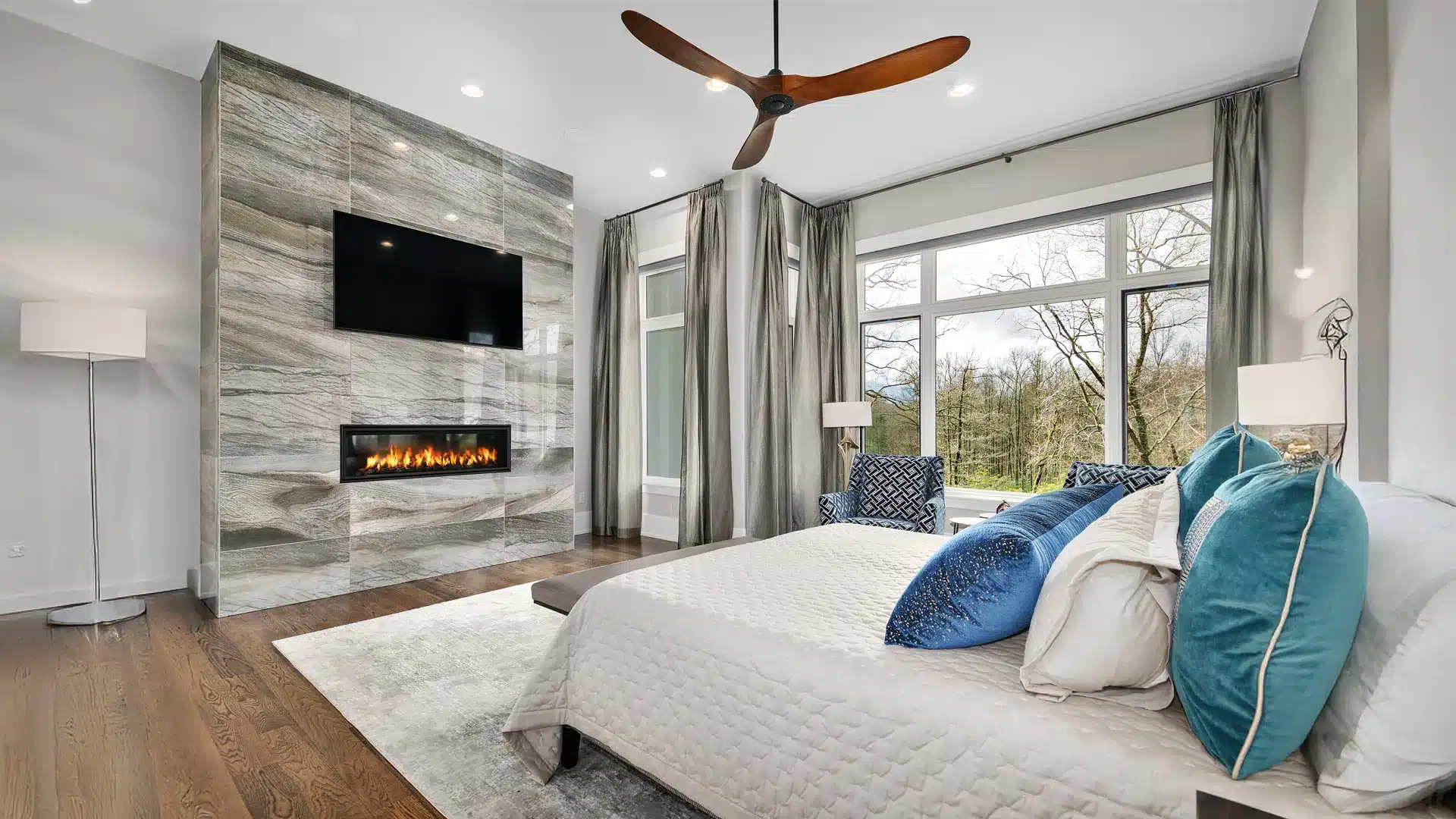
Paint finishes run from flat at one end through eggshell, satin, semi-gloss, and high-gloss at the other. The practical differences between them are a function of the sheen level, which determines how much light the surface reflects and how cleanable it is.
Flat finish absorbs nearly all light that hits it, which creates a soft, velvety surface that reads as deeply rich in color. It hides imperfections in drywall or plaster beautifully because the absorbed light does not reveal surface irregularities. The trade-off is cleanability: flat paint marks when wiped and does not hold up well in areas subject to fingerprints, food, or moisture. It belongs in low-traffic adult spaces: formal dining rooms, primary bedrooms, home offices, and upper-level hallways in homes without young children.
Eggshell adds just enough sheen to make the surface wipeable without introducing any reflective quality that would compromise the color’s soft depth. It is the most versatile finish for most WNC residential applications: living rooms, dining rooms, bedrooms, and any room where cleanability matters but high sheen would look wrong.
According to Benjamin Moore’s residential painting guidelines, eggshell is the most specified finish by professional painters and designers for living and dining areas precisely because it balances color accuracy with practical performance (Benjamin Moore, 2023). The color consultation process at Silver Fox Gallery recommends eggshell as the default for most WNC mountain home wall applications, adjusting up or down based on the specific room’s use and light conditions.
Ceilings: Why They Almost Always Get Flat
Ceiling paint is almost universally flat for two reasons. First, ceilings receive indirect, raking light from windows and fixtures that would reveal every imperfection in a surface with any sheen. Second, the eye is drawn toward sheen, and a shiny ceiling draws attention upward in a way that disrupts a room’s visual balance. Flat white or flat tinted ceiling paint is the standard that serves almost every residential room regardless of what finish is used on the walls.
The exception is a bathroom or kitchen ceiling where moisture is a factor. In those rooms, a low-sheen eggshell on the ceiling provides the moisture resistance flat paint lacks without the attention-drawing quality of higher sheens.
Kitchens and Bathrooms: Where Sheen Earns Its Place
In kitchens and bathrooms, wall surfaces encounter moisture, grease, steam, and frequent cleaning. Flat and eggshell finishes do not hold up well under repeated scrubbing, which makes satin or semi-gloss the appropriate specifications for these rooms. Satin provides good cleanability with a soft, controlled sheen that does not make a kitchen feel clinical. Semi-gloss is particularly appropriate for bathroom trim, door frames, and cabinet faces where durability and cleanability are the primary requirements.
In WNC homes where the kitchen is visible from the living area in an open plan, the kitchen wall finish should be close enough to the living area finish that the transition between spaces reads as deliberate. A living room in matte eggshell transitioning to a kitchen in high-gloss creates a visual inconsistency that the open plan makes impossible to avoid. The color consultation and space planning approach at Silver Fox Gallery treats open-plan finish decisions as a coordinated whole rather than room by room.
Trim, Doors, and Woodwork: The Case for Semi-Gloss
Trim, doors, crown molding, and window casings are the room’s linear architectural accents, and they benefit from a finish that distinguishes them visually from the wall surface while holding up to the physical contact they receive daily. Semi-gloss on trim reads as crisp and clean against matte walls, creates the visual differentiation that gives architectural detail its presence, and cleans easily with a damp cloth.
High-gloss trim is a more formal, more traditional choice that reads as very deliberate. In WNC mountain homes with craftsman-influenced trim profiles, semi-gloss serves the trim’s character more naturally than high-gloss, which belongs more to formal traditional architecture. The design team at Silver Fox Gallery addresses trim finish as part of the whole-room color conversation, because trim finish affects how the wall color reads almost as much as the wall finish itself does.
How Finish Affects Color Perception
The same paint color in two different finishes reads as two different colors in a room. A flat version of a warm cream reads as soft and enveloping. The same cream in semi-gloss reads as brighter and harder. This is because sheen adds apparent lightness and intensity to a color, which shifts the color’s relationship to the room’s other surfaces and to the natural light conditions.
In WNC mountain homes where the light quality changes dramatically from morning to afternoon and from summer to winter, this sheen effect matters when developing a palette. A color that reads as perfectly balanced in eggshell might read as too bright in semi-gloss at the same south-facing wall under afternoon summer light. Testing paint samples in the actual finish you plan to use, not just in the color, is essential before committing to a full room application.
Frequently Asked Questions: Paint Finishes
Can I use different finishes in the same room?
Yes, and it’s standard practice. Using flat or eggshell on walls alongside semi-gloss on trim is the most common combination in residential rooms. The finish change between wall and trim is a functional and aesthetic choice that most rooms benefit from. Using three different finish levels on walls, trim, and ceiling in the same room is also appropriate when each selection serves the surface’s specific use.
Does a darker paint color need a different finish than a lighter one?
The finish selection is driven by the room’s use and light conditions, not by the color’s depth. A deep charcoal in eggshell works beautifully in a dining room with adequate lighting. The same charcoal in flat has a rich, enveloping quality that suits a formal or moody space. Neither is wrong. What matters is whether the finish’s cleanability matches the room’s use pattern. The color consultation at Silver Fox Gallery works through finish selection alongside color depth, considering both the aesthetic effect and the practical requirements.
My older WNC home has plaster walls rather than drywall. Does finish selection change?
Plaster walls typically have more surface texture and minor irregularities than new drywall, which makes flat or low-sheen finishes particularly appropriate because they absorb light rather than highlighting the plaster’s natural variations. Semi-gloss and high-gloss on plaster walls tend to reveal every texture variation in ways that read as rough rather than characterful. Talk to the design team about finish selection for older WNC homes with plaster surfaces.
Summary
Paint finish determines how a color reads, how a surface holds up to use, and how light moves through a room. Flat for low-traffic spaces and ceilings, eggshell for most wall applications, satin and semi-gloss for kitchens, bathrooms, and trim: these are the general principles that produce surfaces that perform well and look right. Silver Fox Gallery’s color consultation service addresses finish selection as part of the full palette conversation for WNC homes. Reach out to start that conversation.


Leave a Reply