
What Sculpture and Three-Dimensional Art Add to a Room That Flat Art Cannot
Key Takeaways
- Three-dimensional art adds depth, shadow, and texture that flat wall art physically cannot, making a room feel layered and alive.
- Sculpture, pottery as art objects, handmade glass, and ceramic figures all qualify and work across a wide range of budgets.
- Placement matters: a three-dimensional piece reads differently from every angle and changes as the light shifts through the day.
- Silver Fox Gallery on North Main Street in Hendersonville carries handmade three-dimensional work from regional and national makers suited to WNC homes.
Stand in a room hung with beautiful paintings and a shelf full of handmade ceramic pieces. Look at both. The paintings are wonderful, but the pottery does something the paintings can’t. It casts a shadow. It has a back. Walk around it and it changes. Pick it up and it has weight and temperature. It’s in the room with you in a way a flat image can’t be.
This is what three-dimensional art brings. Not a replacement for what hangs on the wall, but a different kind of presence, one that engages more senses and makes a room feel genuinely inhabited rather than nicely decorated.
The Difference Between Decoration and Presence
Most people understand the difference intuitively even if they don’t think about it that way. A room with only two-dimensional art, framed pieces on every wall, beautiful as they may be, can feel flat. A room that also has objects, a ceramic vessel on the mantel, a small sculpture on a side table, a piece of handmade glass on the windowsill, has a quality that’s harder to name but easy to feel. It feels occupied. Like someone with real taste lives there and chooses things that matter.
Three-dimensional work creates what designers sometimes call shadow play. As light moves through the day, a three-dimensional piece changes. The texture of a thrown pottery piece catches morning light differently than afternoon light. A carved wood figure throws a shadow at dusk that doesn’t exist at noon. This constant, subtle change keeps a room visually interesting in a way flat art, which looks the same in every light, can’t match.
Types of Three-Dimensional Art That Work in a Home
You don’t need museum-grade sculpture to bring three-dimensional presence into your rooms. Several categories of handmade work do the job beautifully.
Pottery and Ceramic Art Objects
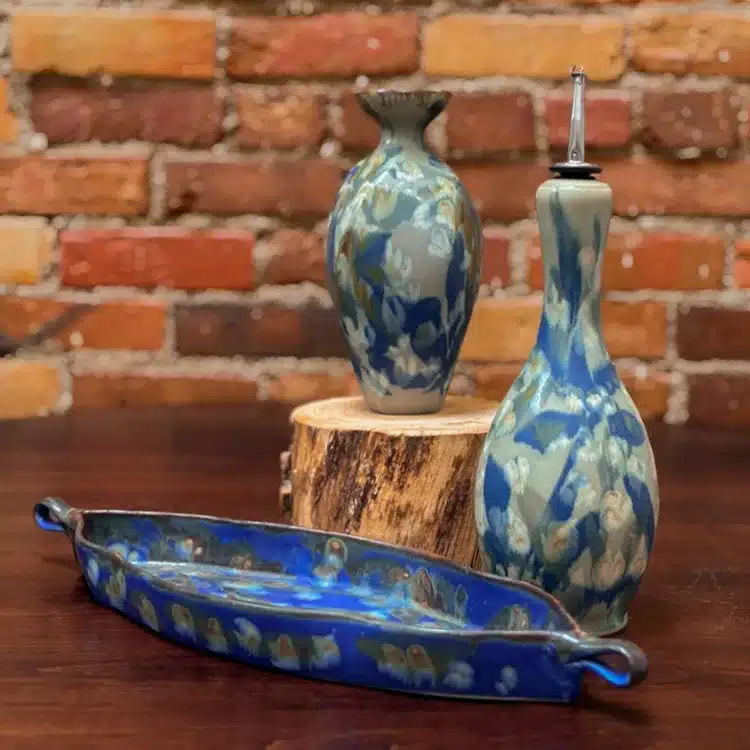
Not all pottery is for daily use. A large hand-thrown vessel on a console, a ceramic figure on a shelf, or a sculptural ceramic piece made to be seen rather than used all function as art objects. These are often the most accessible point of entry into three-dimensional collecting. The range of makers, styles, and prices is enormous, and a single well-chosen piece can anchor a shelf, a mantel, or a corner of a room entirely on its own.
Handmade Glass
A piece of blown glass is sculpture by definition. It has form, weight, and interior depth, and it does that additional thing of interacting with light in a way no other material does. A glass piece on a windowsill changes the room. Placed well, it makes the people walking through notice the light in a way they never did before.
Carved and Cast Work
Small carved wood figures, cast bronze pieces, and hand-built ceramic sculptures are a step closer to what most people think of as traditional sculpture. They tend to anchor a space with more formality. A carved wood piece in a mountain home carries a connection to the material and the craft tradition of the region. These pieces invite you to look from multiple angles, which is what makes them fundamentally different from anything that hangs on a wall.
Functional Objects as Art
There’s a category that sits at the intersection of use and art. A handmade candlestick. A beautifully crafted box. A turned wood bowl that’s too beautiful to fill with fruit. These objects earn their place on a surface by being used or simply by being looked at, and the best of them are genuinely both. In a home that values craft, these pieces often carry as much meaning as a painting does.
How to Place Three-Dimensional Work
Placement is where three-dimensional art rewards thoughtfulness more than flat work does.
Consider Every Angle
Before you commit to a spot, walk around a three-dimensional piece and look at it from multiple sides. Where does the best angle land? Does it face the door so arriving guests see it from the front? Does it sit where the afternoon light will catch the texture? A few minutes of consideration here pays off every day.
Give It Room to Be Seen
Three-dimensional work reads best when it has some space around it. A shelf crowded with objects loses the shadow play and depth that makes a single good piece so powerful. Pull back. Let a piece breathe. The empty shelf around it is part of the composition, not wasted space.
Height and Sight Lines
A sculptural object works best when your eyes can meet it naturally. Too low and you’re looking down on it; too high and you’re craning. On a console, mantel, or shelf at roughly standing waist height to mid-chest height, most three-dimensional pieces read beautifully.
Pair With Light
If you have a lamp nearby, notice what it does to a three-dimensional piece in the evening. A piece with texture catches light from the side in a way it doesn’t under flat overhead lighting. Positioning a ceramic or carved piece near a lamp source gives it a nighttime quality entirely different from its daytime one.
Building a Collection of Three-Dimensional Work
Many people start without thinking of it as collecting at all. They buy a piece of pottery because they love it. Then a piece of glass because it made them stop. Then a small carved figure because it felt right in the hand. Over a few years, they look around and realize they have a collection of three-dimensional objects that tells a story about their taste and their life.
This is one of the pleasures of buying handmade work over time rather than furnishing a home in one trip. The pieces arrive with their own stories, from different makers at different moments, and they bring all of that into the rooms they inhabit.
Silver Fox Gallery in downtown Hendersonville has spent more than twenty years choosing three-dimensional work from regional and national makers. Jennifer, the owner, selects each piece herself, with an eye for craft and a sense of how things live in real homes. As she puts it, come feel what handmade really means. With three-dimensional art especially, that instruction is literal. Hold the piece. Feel its weight. Turn it in the light.
Summary
Three-dimensional art adds shadow, depth, texture, and a physical presence to a room that flat wall art can’t match. Pottery as art objects, handmade glass, carved pieces, and beautiful functional objects all qualify and work across a wide range of budgets. Give each piece space to breathe and position it where the light will reach it from multiple angles through the day. Collect slowly, choosing pieces you genuinely love, and the result will feel more personal than any matching set ever could.
Frequently Asked Questions
What’s the easiest way to start adding three-dimensional art to my home?
Pottery and ceramic art objects are the most accessible starting point. They come in a huge range of styles, sizes, and prices, and a single well-chosen piece on a shelf or mantel immediately adds the depth and texture that flat art alone can’t provide. Silver Fox Gallery in Hendersonville carries a range of handmade ceramic work from regional and national makers.
How do I choose between a functional piece and a purely decorative one?
Trust what you’re drawn to. Many of the best pieces function beautifully as both: a handmade bowl you’d happily fill with fruit but is also too beautiful not to display. Don’t feel like you need to choose one category. A piece that’s useful and visually compelling earns its place in both ways.
Does three-dimensional art need special lighting?
Dedicated art lighting isn’t required, but positioning a three-dimensional piece near a lamp or where natural light hits it from the side makes the most of its texture and shadow play. Flat overhead lighting flattens everything, including sculptural work. A bit of side light brings it alive.
Can three-dimensional work and flat art coexist on the same surface?
Yes, and they often look wonderful together. A shelf with a framed small painting leaned against the back and a piece of pottery in front creates depth and layers the eye into. The flat piece provides the backdrop; the three-dimensional piece provides the foreground.
How much should I spend on three-dimensional art objects?
The range is as wide as it is for any art. A beautiful handmade pottery piece can be an easy first buy. A sculptural one-of-a-kind work represents a larger investment. Silver Fox Gallery carries three-dimensional work across a real range of price points with no minimum purchase, so you can start at whatever level fits your budget.

Leave a Reply