A house becomes a home when the things inside it are chosen rather than defaulted to, and when they reflect the people who actually live there.
The feeling of home doesn’t come from having everything finished. It comes from having things that are genuinely yours.
Handmade objects, original art, and pieces collected over time carry the kind of specificity that turns a space into a place.
Silver Fox Gallery on North Main Street in Hendersonville has helped people across Western North Carolina build homes that feel like themselves for more than twenty years.
Most people have walked into a house that was beautiful on paper, expensive furniture, fresh paint, everything in its place, and felt strangely cold. And most people have also walked into a smaller, less polished house and felt immediately at ease. The difference isn’t money. It isn’t square footage. It isn’t even taste in any conventional sense.
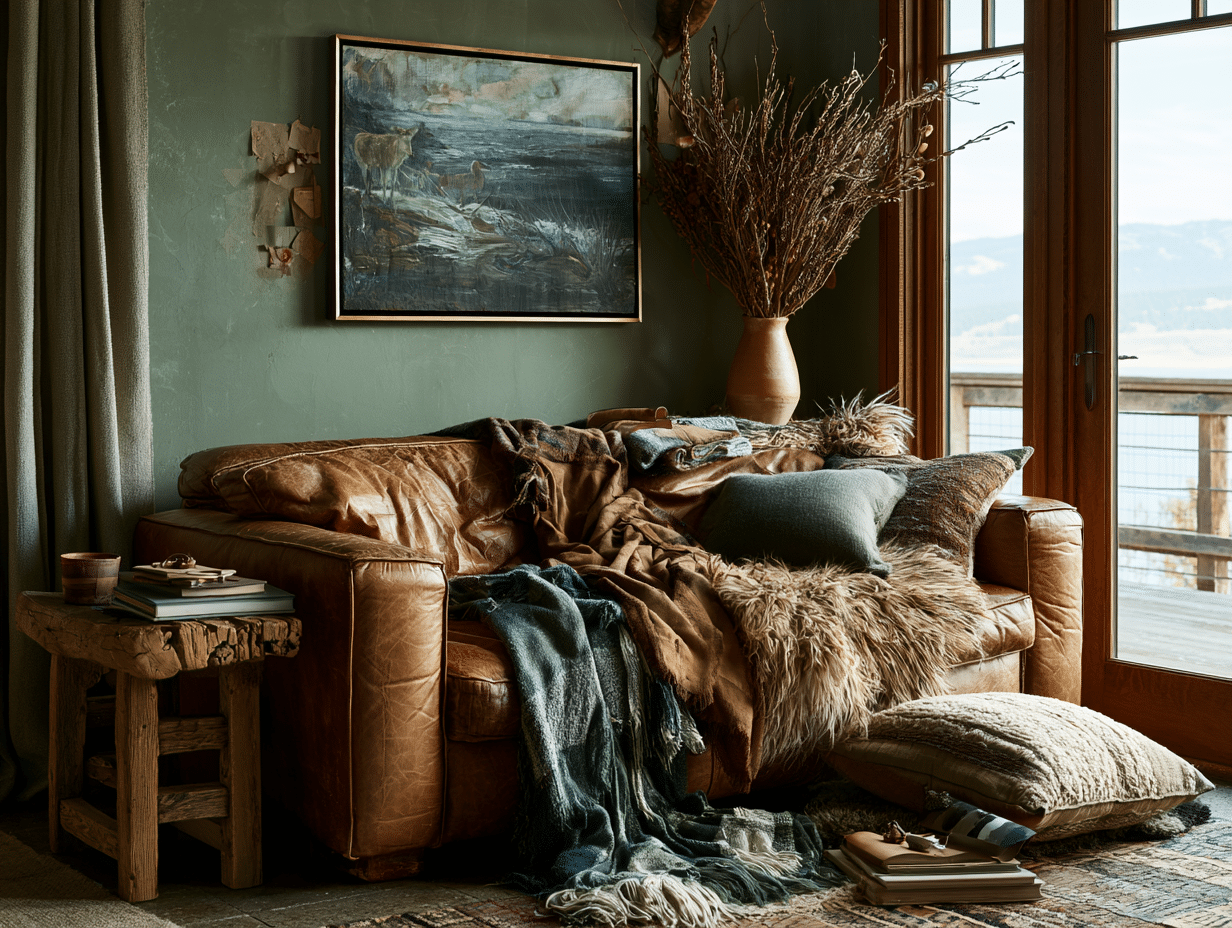
It’s a quality that’s harder to name but completely recognizable: the feeling that someone actually lives here, that the things in this house were chosen by people who care about them, that the space is inhabited by a real life.
What creates that feeling? A few honest answers.
Things That Were Chosen, Not Defaulted To
The clearest marker of a home that feels like someone’s is that nothing in it appears to be there by accident. The furniture wasn’t selected from the first page of a search result and delivered in a single order. The art on the walls wasn’t purchased as a set of three from a chain store. The objects on the shelves arrived because someone liked them, not because they were included in a room package.
Choice is the operative word. A home feels personal when you can sense that the people who live there made genuine decisions about what surrounds them. Those decisions don’t have to be sophisticated or expensive. A piece of pottery on a kitchen shelf that cost very little but that a person loves because of who made it, where they found it, what it means to them: this communicates more than a thousand-dollar vase selected from a catalog.
This is why handmade objects tend to do so much for a home. A handmade thing forces a choice. You can’t default to it the way you can default to a mass-produced piece. You found it, liked it, decided to own it. That decision is in the object itself.
The Presence of Original Art
Walk into a home with original art on the walls and you know something about the person who lives there. Not because art signals wealth, but because it signals caring. Someone found a piece of work made by another person, was moved by it, and chose to live with it. That’s a statement about values that almost nothing else in a home makes so directly.
This isn’t about having expensive art. It’s about having original work that was chosen because it meant something. A small painting by a Western North Carolina artist that captures the light on a November afternoon. A print from a maker the homeowner met at a gallery in downtown Hendersonville. A piece of pottery that lives on the mantel because it was the first art object someone ever bought for themselves.
Original work carries the presence of another person’s care. Mass-produced art carries nothing.
Accumulated Things, Not Instant Things
A home that feels lived-in usually shows the evidence of time. Not clutter, but layers. A piece that came from a grandparent alongside one bought last year. A collection that grew over a decade instead of arriving in boxes from a single order.
This layering is impossible to fake and impossible to rush. You can’t buy a home’s accumulated quality in one shopping trip. It has to build, which means the most hospitable homes are often the ones where the owners have lived for a while and chosen carefully rather than filled quickly.
The practical implication is this: don’t feel pressure to finish a home fast. Leave spaces that are incomplete. Let the right pieces arrive when you find them. A dining room with a great table and two bare walls feels more like a home than one where every corner was filled in a weekend and nothing was truly chosen.
Things That Work
A home that feels comfortable is one where the things inside it function in the service of real life. A sofa that’s actually comfortable to sit in. A dining table that can hold the people you like eating with. Lamps that light a room warmly in the evening. Dishes you genuinely like eating from.
This is where handcrafted furniture pays off in ways that comfort alone doesn’t explain. A solid wood table that has absorbed years of meals has a presence that a catalog table, delivered flat-packed and assembled once, never acquires. The years of use are in the object. You can feel them.
The same is true of handmade pottery, well-made furniture, a chair that’s been sat in a thousand times and improved for it. These objects are doing more than function. They’re holding a record of the life that happened around them.
The Smell of Real Materials
This is too specific to be the main point, but it’s true: a home filled with natural materials has a quality that a home of synthetic ones doesn’t. Solid wood, wool, leather, cotton, pottery: these things have a material presence you register without thinking about it. A room of engineered wood, synthetic fibers, and plastic objects feels different. Not worse in any explicit way. Just more inert.
Natural materials are a quiet background quality of homes that feel good to be in, and handmade objects tend to be made from real materials by virtue of what they are.
Your Home Is Allowed to Be Yours
A persistent barrier to building a home that feels genuine is the feeling that it has to meet some external standard. The right style, the right look, the curated aesthetic that reads correctly on a screen.
But the homes that actually feel good to be in are rarely the ones that look designed for a photograph. They look designed for the people who live there, which is a completely different brief. They have the art that the owners love even if it doesn’t fit a trend. The furniture that works for how those people actually live. The handmade pieces that carry meaning specific to those lives.
Jennifer, the owner of Silver Fox Gallery, has helped people across Hendersonville and Western North Carolina build homes that feel like themselves for over twenty years. Her approach has always been relational, not prescriptive. As she puts it, come feel what handmade really means. That feeling is the thing itself: not a style, not a look, but the quality of a home where someone chose what surrounds them with real care.
Summary
A house feels like a home when the things inside it were genuinely chosen, when original art is present to carry the care of another person’s making, when the layers of accumulated time are visible, when the functional objects work beautifully, and when the whole space reflects the specific people who live there rather than a generic idea of how things should look. None of this requires wealth or a professional eye. It requires care, patience, and the willingness to choose what you love rather than what seems safe. To find pieces worth choosing, stop by Silver Fox Gallery at 508 North Main Street in Hendersonville, or call (828) 698-0601 for hours and directions.
Frequently Asked Questions
Why does a house sometimes feel cold even when it’s beautifully furnished?
Because beautiful and personal aren’t the same thing. A house furnished with expensive matching pieces all selected at once can look correct without feeling inhabited. A home feels warm when the things inside it were chosen over time by people who care about them, and when there’s evidence of real life in the objects and spaces.
Does original art really make a difference in how a home feels?
Yes. Original art carries the presence of another person’s care in a way that mass-produced work doesn’t. It tells visitors something true about the people who live there, not because art signals wealth but because choosing it signals values. A small original piece by a regional maker does more for a room than a dozen forgettable prints.
Is it better to furnish a home slowly or all at once?
Slowly. A home furnished quickly in one order has a uniform newness that can feel impersonal. A home where pieces have arrived at different moments, chosen individually because each one was the right thing, feels layered and genuine. Leave spaces incomplete and let the right pieces find their way in over time.
Do handmade objects actually make a room feel better?
Yes, in a real and practical way. Handmade objects force a genuine choice, which means they reflect the person who owns them more directly than a default purchase does. They’re also usually made from natural materials, which have a sensory quality that synthetic ones lack. The combination of specificity and material honesty is what makes handmade things feel like they belong.
Where do I start if my home doesn’t feel personal yet?
Start with one room and one piece. Find a piece of original art you genuinely love and hang it. Or find a handmade object that means something to you and put it somewhere you’ll see it daily. Build from that single honest choice. The feeling of home grows from individual decisions, not from a room makeover.




Leave a Reply