How to Design a Home That Makes Guests Feel Genuinely Welcome
Key Takeaways
Hospitality is a design problem. The physical choices you make in a home either support the feeling of welcome or they don’t.
The entryway, the seating arrangement, and the guest bedroom do the most practical work when visitors arrive.
Original art and handmade objects tell guests something real about who you are, which is one of the warmest things a home can do.
Silver Fox Gallery on North Main Street in Hendersonville helps people across WNC furnish homes built around gathering and welcome.
Hospitality in Western North Carolina isn’t just a social custom. It’s part of how the mountains work. People drive a distance to visit. They stay through a meal, sometimes through a weekend. The home they arrive at does a lot of the welcome before anyone says a word.
Most people think about hospitality as what they do when guests arrive: the food, the conversation, the warmth they bring to the interaction. But the physical space does its own work ahead of all that. The right furniture in the right place, the art that tells a story, the guest room that says someone thought about this: all of it shapes how people feel from the moment they walk through the door.
Here’s how to design that feeling in.
The Entryway: First Impressions Are Physical
Before a guest sits down or eats anything, they arrive. Whatever they encounter in those first moments, the entry hall, the front porch, the first surface they see, sets the whole visit. This is the one place in the house where the design does pure emotional work with no other purpose.
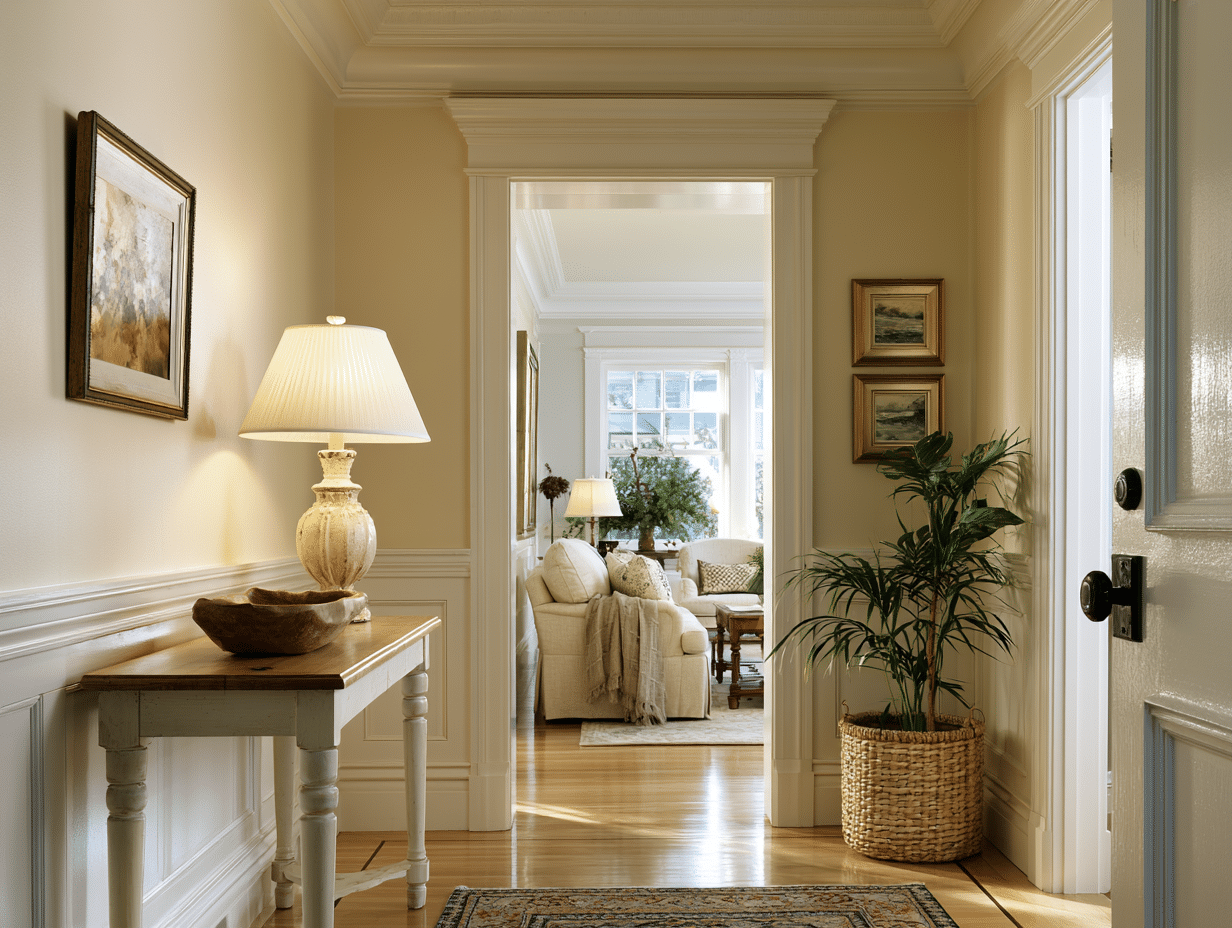
An entryway that welcomes has a place to land: somewhere to put down what you’re carrying, somewhere to sit if you need to take off shoes. A console table with a bowl for keys and something beautiful on it. A lamp that lights the entry warmly rather than starkly. A piece of art that says something real about the people inside.
This isn’t about a grand entrance. It’s about a moment that says: you’ve arrived somewhere people care about. That moment is made of furniture, light, and objects, not just words.
Seating That Pulls People Together
In a living room designed for hospitality, furniture arrangement matters more than furniture itself. A beautiful sofa facing a television across a room full of coffee table books reads as a room for watching, not for talking. A seating arrangement where chairs and a sofa face each other, close enough that conversation doesn’t require projection, is a room built for people.
The conversation distance matters. Research on social interaction suggests that seating more than eight feet apart is uncomfortable for sustained conversation. Most living rooms are arranged too far apart for their own good, because the furniture was placed against the walls rather than pulled in to create a genuine gathering space.
Pull seating into the room. Bring chairs close enough that they can join the circle. Remove anything that creates a barrier across the middle of the group. These changes, which cost nothing, often do more for the hospitality of a room than any new piece of furniture.
For rooms where you regularly have six or more people, make sure there’s somewhere for everyone to sit: chairs that can pull in from a desk or dining table, extra seating that isn’t pushed to a wall. The hospitality of a room is partly just the arithmetic of seats.
A Dining Table Built for Gathering
The dining table is the most explicit hospitality object in a home. Its job is to bring people together around food, which is the oldest form of welcome there is. A table that can expand, that fits everyone without crowding, that has chairs comfortable enough to sit in for two hours of conversation after the meal: these are practical hospitality choices.
Handcrafted dining tables earn their cost here more than anywhere. A solid wood table built for gathering has a presence that a flat-pack one doesn’t. It holds the weight of a holiday meal without flexing. It develops the marks of all those meals over time, a patina that cheap tables replace rather than accumulate.
The Guest Bedroom: Your Most Direct Hospitality Investment
If guests stay overnight, the guest bedroom is where your hospitality is tested most directly. A good guest room doesn’t need to be large or expensively furnished. It needs to feel like someone thought about it.
A comfortable bed with good bedding. A bedside table at the right height with a lamp and somewhere to set a glass of water. A small piece of original art or a handmade object that makes the room feel personal rather than generic. Enough closet or shelf space to unpack for a few days. A mirror.
These are not extravagant requirements. The difference between a guest room that feels hospitable and one that feels like an afterthought is almost entirely whether someone put thought into the specific needs of a person sleeping there.
A piece of local art in the guest bedroom is worth particular mention. Visitors from elsewhere, and there are many in the mountains of WNC, often appreciate something that says: you’re in a particular place, with character and story. A small landscape painting or a piece of regional pottery in the guest room is a quiet form of hospitality that goes beyond thread count.
What Art and Handmade Objects Do for Hospitality
This is less obvious but worth naming. Original art and handmade objects tell guests something true about who you are. They say: these people chose what surrounds them. They care about craft, about the work of specific makers, about having things that reflect their actual lives.
This kind of disclosure, if that’s the right word, is one of the warmest things a home can offer a guest. It creates a foundation for conversation. It says something before anyone has to say anything. A home full of generic chain-store decor gives a guest nothing to ask about. A home with a painting by a regional artist, a piece of pottery from a local maker, a handmade wooden bowl on the dining table: these things open conversations, tell stories, and create the feeling that you’ve been welcomed into a real life.
Silver Fox Gallery has spent over twenty years helping people across Hendersonville and the wider WNC region furnish their homes around exactly this kind of warmth. Jennifer, the owner, chooses every piece in the gallery with a feeling for how it lives in real homes that welcome real people. As she puts it, come feel what handmade really means. That feeling is what guests experience when they walk through the door.
Summary
Hospitality is a design problem as much as a social one. The entryway sets the welcome before anyone speaks. Seating pulled together rather than pushed against walls creates a room for conversation. A handcrafted dining table holds the weight of gathering in the most literal way. A guest bedroom that feels thought-about, with original art and genuine comfort, is your most direct hospitality investment. And art and handmade objects throughout the home tell guests something true about who you are, which is one of the warmest things a home can do.
Frequently Asked Questions
What’s the most important room to get right for hospitality?
The entryway and the living room do the most work, but if guests stay overnight, the guest bedroom matters most directly. A guest room that feels genuinely considered, with a comfortable bed, proper bedside lamp, and a piece of original art, tells visitors they were thought about before they arrived.
How should living room furniture be arranged for conversation?
Pull seating toward the center of the room so people face each other at a comfortable conversational distance, roughly five to seven feet. Arrange chairs and sofas so everyone is part of one circle rather than separated along the walls. Remove anything that creates a barrier across the middle of the group.
Does art actually affect how guests feel in a home?
Yes. Original art and handmade objects tell guests something real about the people who live there and create a foundation for conversation. A home with work by local and regional makers gives visitors something specific to ask about and responds to. That kind of disclosure is a quiet form of hospitality.
What’s the minimum a good guest bedroom needs?
A comfortable bed with good bedding. A bedside table at mattress height with a lamp. Enough closet or shelf space to unpack for a short stay. A mirror. A piece of original art or a handmade object that makes the room feel personal rather than generic. None of these are expensive requirements, but all of them matter.
How do I make an entryway feel more welcoming?
Give it a surface for landing (a console or small table), a lamp for warm light rather than harsh overhead lighting, somewhere to sit if needed, and one piece you love: a piece of original art, a handmade bowl for keys, a small ceramic object. The goal is a moment that says someone thought about arrival.




Leave a Reply